
Last year, the renal and palliative care teams at Auckland City Hospital contacted the Auckland branch of the New Zealand Society of Translators and Interpreters (NZSTI) to help organise a presentation on issues relating to interpreting in medical consultations. Both teams work with patients who have life-limiting conditions and frequently need to have sensitive discussions with patients and their families.
I am not an interpreter and frankly am far too committed to my privilege as a translator of being able to research terms and ponder before committing my words to paper.
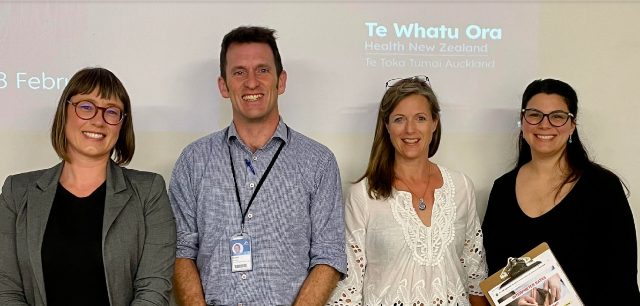
But as president of the Auckland branch of the NZSTI it was my privilege to work with two experienced medical interpreters, Elizabeth Broom and Carolina Cannard, to present to the clinical staff of the renal and palliative care teams.
Clinicians and interpreters share a common objective: delivering excellent care to patients. But opportunities for them to come together and explore their individual roles are scarce. This event bridged that gap, and was met with a warm welcome from the audience.
This kind of outreach event may seem a scary prospect when we are used to being the conduit for communication rather than communicating about what we do and how we do it. But I genuinely think that only good things can come from open dialogue and collaboration and it was immensely gratifying to be able to contribute towards increasing understanding among clinical staff of the vital work performed by interpreters.
🔗 Presentation Link: Click here for a write-up of the presentation and Q&A session
 © Muse Translation 2022
Leave a comment